
Home blood pressure monitoring can be one of the most useful things a person with hypertension does — or a source of endless confusion. The difference usually comes down to technique. Small mistakes in posture, cuff fit, or timing can shift a reading by 10–20 mmHg, turning a normal result into a worrying one, or hiding a real problem.
Here's what actually matters.
Choose the right monitor
Use a validated upper-arm cuff, not a wrist monitor. Wrist monitors are sensitive to positioning and generally less accurate. Look for a device validated by the British Hypertension Society (BHS), ESH, or AAMI. Most major brands (Omron, Beurer, Withings) sell validated devices.
Get the cuff size right
This is the most commonly ignored factor. A cuff that's too small reads high; too large reads low. Measure the circumference of your upper arm and match it to the cuff's listed range. Most adults need a medium (22–32 cm) or large (32–42 cm) cuff.
Prepare for 5 minutes before measuring
- Sit quietly. No talking, phone scrolling, or TV.
- Empty your bladder first — a full bladder raises BP by 10–15 mmHg.
- No coffee, exercise, or smoking in the 30 minutes before.
- Sit with your back supported, feet flat on the floor.
Position yourself correctly
- Rest your arm on a flat surface so the cuff is at heart height. Holding your arm unsupported raises the reading.
- The cuff should sit about 2–3 cm above the elbow crease.
- Keep your arm still and relaxed during the measurement. Don't clench your fist.
Take two readings, use the average
Take a reading, wait 1–2 minutes, take another. Use the average. The first reading is often higher due to the alerting response — this is normal and not a cause for concern.
Measure at the same times each day
Blood pressure follows a predictable daily pattern — lower in the morning, rising through the day, peaking in the late afternoon, dropping at night. To track a trend meaningfully, measure at the same times: typically morning (within an hour of waking, before medication) and evening (before bed).
A log of morning and evening readings for two weeks tells your doctor far more than a single clinic measurement.
What to log alongside the reading
The raw number is only half the information. Log:
- Time of day
- Which arm you used (always use the same arm — the non-dominant arm typically reads slightly higher)
- Any relevant context: stress, exercise, alcohol the night before, poor sleep
- Whether you took medication before or after
This context is what transforms a list of numbers into a clinical picture.
When to call your doctor
- Consistently above 140/90 at rest after two weeks of correct technique
- A single reading above 180/120 — same day
- Large variation between readings taken minutes apart (more than 15 mmHg) — this can indicate arrhythmia or an equipment problem
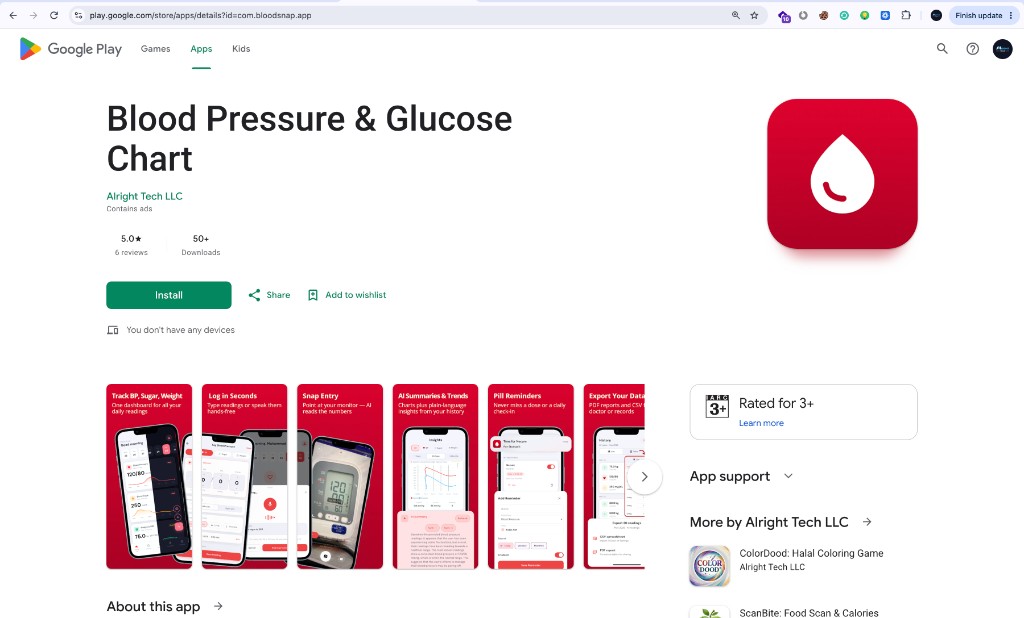
Track this in BloodSnap. Log morning and evening readings with arm and context tags, see your trend, and export a clean PDF for your appointment.